How FDG IT uses artificial intelligence to enable precise radiation forecasts for emergencies.
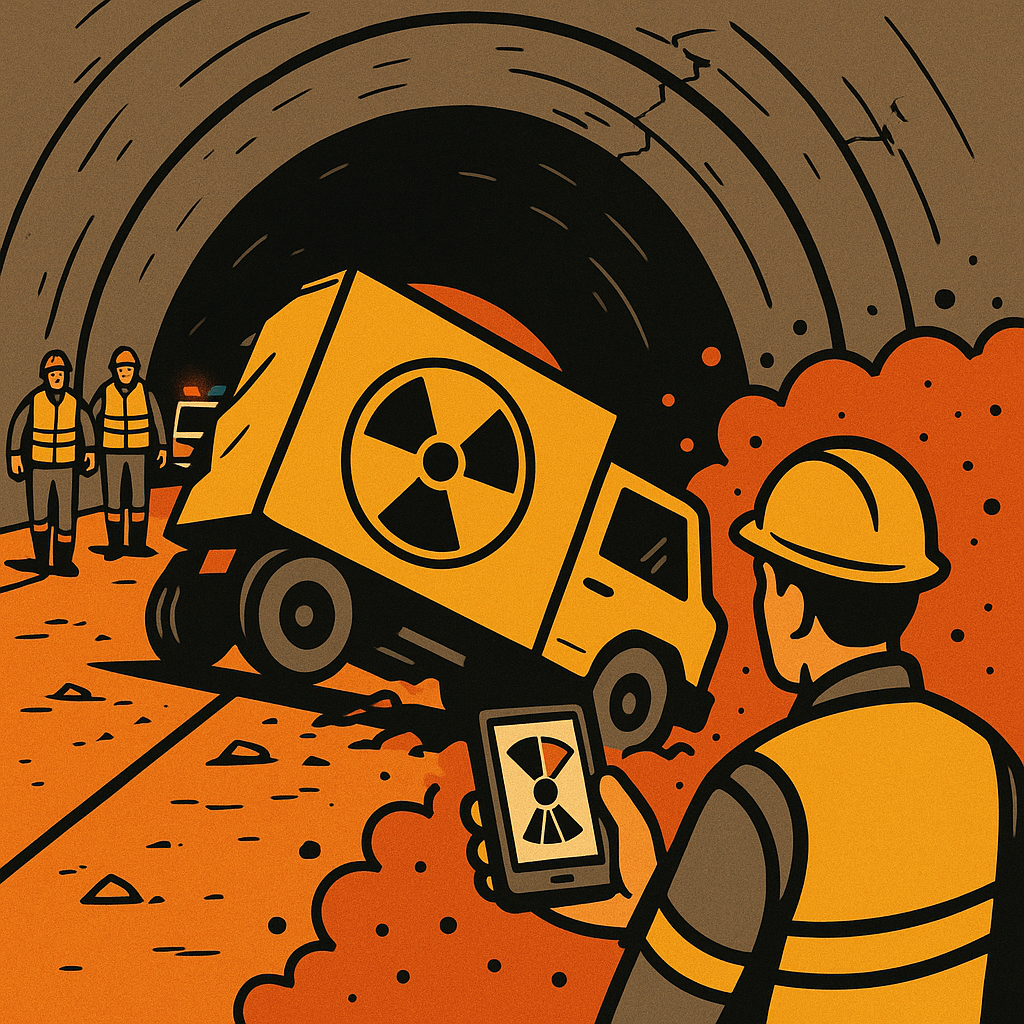
Safety in underground transportation routes is a highly complex and safety-critical task. FDG-IT has taken up this challenge and investigated how artificial intelligence can help to predict the radiation intensity of tunnel accidents.
By developing and validating a new digital function, the company was able to significantly expand its technology portfolio. In collaboration with EDIH Hamburg, valuable experience was gained with data-driven methods and new internal expertise was built up in the field of digital security technology. This not only strengthens FDG-IT’s market position vis-à-vis infrastructure operators, but also creates the necessary trust in AI-driven security solutions.
The project at a glance
- Customer type: SME (medium-sized business)
- Industry: Security technology / IT services
- Focus: AI-supported real-time predictions in crisis scenarios
- Partner: FDG-IT
Challenges
Radiation accidents in underground tunnels pose extreme problems for rescue teams. The environment is cramped and the radiation often behaves unpredictably due to reflections, shielding and complex air circulation patterns. In order to plan safe escape routes, emergency services need fast and precise predictions.
However, existing monitoring systems are often expensive to maintain and impractical for extensive tunnel networks. For an SME like FDG-IT, this resulted in a massive innovation gap: How can trustworthy real-time predictions be made when only a few measuring points are available and real accident data for model training is almost non-existent? The development of such a system required close, creative collaboration between technical experts, data scientists and rescue workers in order to achieve reliable results despite sparse data.
The solution
As part of a proof of concept (PoC), the technical basis was created to generate usable predictions from noisy and incomplete data. The focus was on training and evaluating AI models under real conditions.
The support provided by EDIH Hamburg was a decisive accelerator in this process:
- Expert advice: Support in the selection of suitable AI methods for safety-critical areas.
- Technical infrastructure: Provision of a professional framework for prototyping.
- Risk minimization: Efficient transition from theoretical concept to validated prototype, reducing development costs and risks for the SME.
This success lays the foundation for a new generation of security systems that are smarter, faster and more accessible. FDG-IT is proving that AI can make a significant contribution to protecting human lives by providing clarity in uncertain times.